


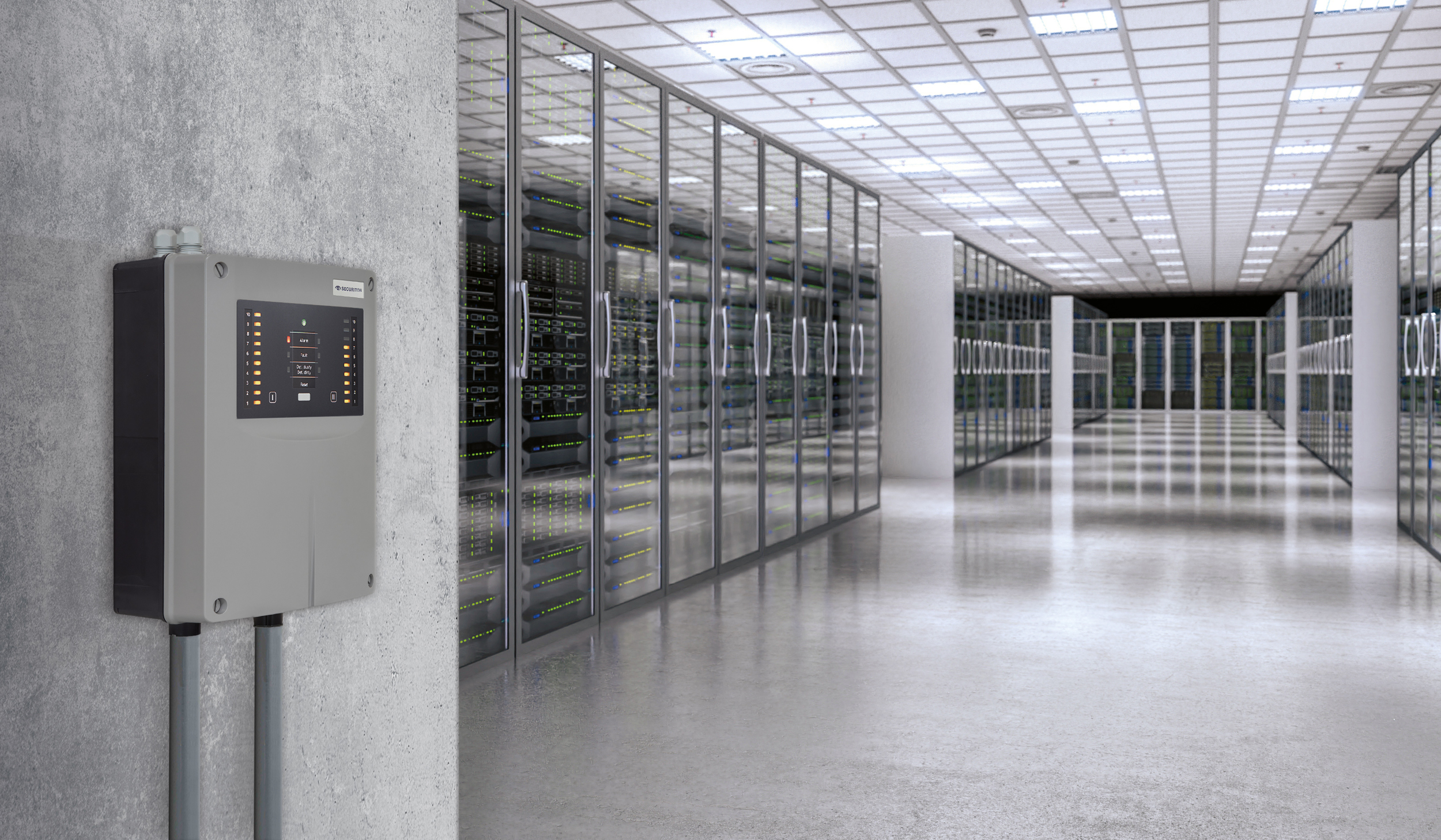
Early warning fire detection keeps valuable data flowing
23.05.2025
Data is the lifeblood of modern business and society, placing immense responsibility on data centre providers to ensure continuous service despite threats like power cuts, cyberattacks, or even fire.
The cost of an outage has severe consequences, halting business transactions and even disrupting life-saving operations. While data centre operators implement stringent contingency measures for power outages and cyberattacks, the physical threat of fire must be treated with the same urgency—especially as it has the potential to destroy data centre infrastructure completely.
The Need for Enhanced Fire Protection
Fire protection in data centres must go beyond regulatory requirements, which primarily focus on life safety. Simply sounding an alarm when flames are visible and allowing staff to evacuate while critical infrastructure burns is not a viable approach. Instead, early and highly reliable fire detection is essential to prevent lengthy service interruptions and catastrophic losses.
Fire Risks and Detection Challenges in Data Centres
Data centres are complex environments requiring the highest standards of fire detection. A single technology cannot provide comprehensive protection; instead, a holistic approach incorporating multiple detection and suppression methods is essential. At Securiton, we integrate our key technologies to provide an unprecedented level of early and reliable fire detection.
At the core of a data centre are server racks generating significant heat. These densely packed aisles of networking equipment pose a substantial fire hazard, requiring constant cooling and monitoring. Adding to the challenge, data centres are often located in remote areas with minimal human access, making fire detection, maintenance, and suppression more difficult.
Even a small smouldering component within a server cabinet can cause extensive damage due to the rapid airflow of HVAC systems. At the same time, false alarms leading to unnecessary shutdowns or suppression activation can severely impact service continuity. Planners must therefore balance early and reliable detection with operational stability.
Beyond server racks, other potential fire hazards include backup power systems like generators and battery banks, power distribution networks, HVAC systems, and cabling in suspended ceilings and raised floors. Each area requires a tailored approach to fire detection and suppression.
Performance-Based Design: A Holistic Fire Safety Solution
Regulatory fire safety standards prioritize life safety, which is crucial. However, for businesses providing critical services, compliance alone may not be sufficient to protect infrastructure and ensure continuity. To achieve robust fire protection, planners must adopt Performance-Based Design (PBD) methodologies, tailoring solutions to specific risks and operational requirements.
For example, aspirating smoke detectors (ASD) provide highly sensitive smoke detection, leveraging the airflow in server aisles to identify even the earliest traces of a fire. Unlike conventional point-type detectors, which struggle in high-airflow environments, ASD systems sample air continuously, turning the cooling system into an advantage rather than a challenge.
ASD systems are also ideal for monitoring cabling in concealed floor spaces, suspended ceilings, and return air grilles, offering an efficient and low-maintenance solution. Meanwhile, heat detection is better suited for areas with high ambient temperatures, such as around generators. In battery rooms, a combination of off-gas and heat detection provides an additional layer of protection.
All these detection methods can be integrated through SecuriFire panels, which also control complex suppression systems, ensuring rapid and effective response. By combining multiple state-of-the-art technologies, this holistic approach minimizes the risk of a fire escalating into a costly disaster.
